



← Root canal treatment at Sage Dental Specialists

[Last updated: 13 August 2026]
Who is an Endodontist? What happens in a specialist root canal clinic?
Key takeaways:
-
If you have been told you need a root canal, are experiencing persistent tooth pain, or have a root-canal-treated tooth that has flared up again, an endodontist is a dental specialist trained specifically to manage these conditions
-
In Singapore, the title is regulated — only dentists on the Singapore Dental Council specialist register may use it
-
No referral letter is needed. You can book a specialist consultation directly
An endodontist is a dental specialist that focuses on treatment of the dental pulp and tissues surrounding the roots of the teeth. This specialty is one of Singapore’s officially recognised dental specialties.
An endodontist has completed additional years of full-time specialist training and has obtained accreditation from the Dental Specialists Accreditation Board to be registered as a specialist in Endodontics. Endodontists commonly manage root canal treatments, retreatment of previous root canals, dental trauma, cracked teeth, dental infections, and other challenging conditions involving the roots of teeth.
What does "endodontist" actually mean?
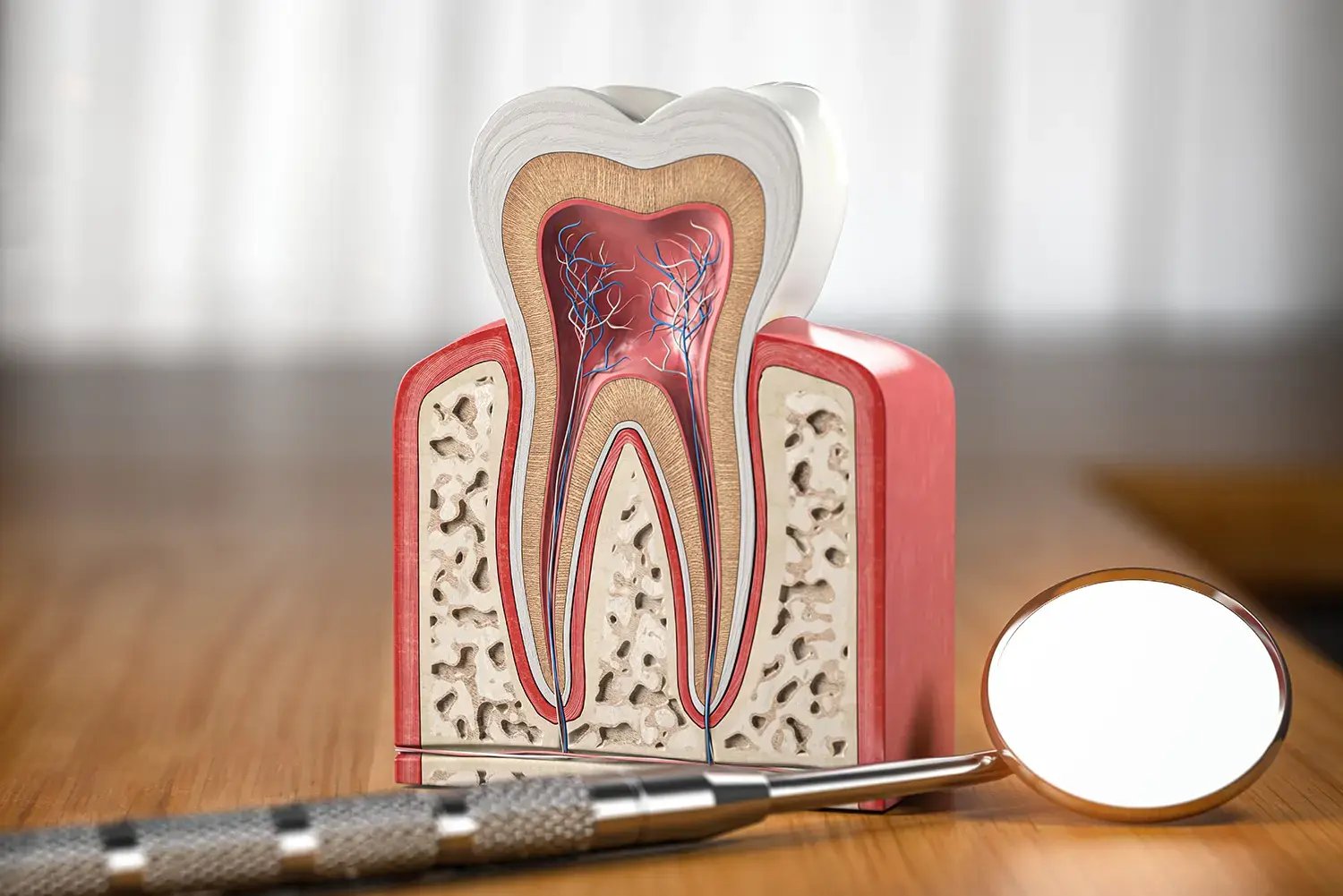
The word comes from the Greek endo (inside) and odont (tooth): an endodontist treats the inside of the tooth. Every tooth carries a soft core of nerves and blood vessels, the pulp, running through fine channels in the roots called canals.
When deep decay, a crack or an old injury inflames or infects that core, treating it means working inside those canals, in spaces measured in fractions of a millimetre. That is what endodontics is.
What training sits behind the title?
In Singapore, the route is a dental degree (Bachelor of Dental Surgery), then a further three years of full-time postgraduate specialist training (Master of Dental Surgery in Endodontics), then registration as a specialist with the Singapore Dental Council. The title is protected: only dentists on the SDC specialist register may call themselves specialists in endodontics.
At Sage Dental Specialists, that specialist is Dr Elyssa Yap, BDS, MDS (Endodontics), who spent more than ten years in the public sector, including at the National Dental Centre Singapore, and has published research on the management of cracked teeth.
What does a specialist root canal clinic do?
A specialist root canal clinic performs various endodontic procedures, such as:
-
Root canal treatment. Any tooth that requires root canal treatment. It can range from a simple anatomy to teeth with curved, hidden or calcified canals, where extra canals small enough to be missed without magnification are common.
-
Root canal retreatment. Reopening a tooth treated years ago that has flared up again, removing the old root filling, and dealing with what was missed.
-
Diagnosis of difficult tooth pain. When the tooth that hurts is not clearly the tooth that is diseased, specialist testing exists for exactly this.
-
Cracked tooth assessment. Cracks are often too fine to show on an X-ray. Under a microscope they become visible, and assessment changes from guesswork to inspection.
-
Endodontic surgery. An apicoectomy seals the root tip from below the gum when re-entering the tooth from above is not the answer, and it is one of the few endodontic procedures that is Medisave-claimable.
At Sage Dental Specialists, root canal treatment is carried out under a dental operating microscope at up to 20× magnification, with rotary nickel-titanium instruments, laser-assisted canal disinfection and low-dose digital X-rays. These technologies help our root canal specialist visualise the root canal system more clearly, clean and disinfect the canals thoroughly, and carry out treatment with precision.
To make an appointment at Sage Dental Specialists, please call or WhatsApp +6597365989.
How is an endodontist different from a general dentist?
The difference is in their area of expertise, not their rank.
A general dentist looks after the whole of your mouth over years: check-ups, fillings, gum health, crowns. Many treat straightforward root canals well.
An endodontist on the other hand, concentrates on one specific and specialised corner of dentistry. The two roles work in sequence rather than in competition.
Dentists refer the cases they would rather a specialist handled, the specialist treats the root canal, and coordinates with your general dentist to follow-up on with your regular care.
How do you end up at an endodontist?
Most patients arrive one of two ways.
1) The first is referral: your dentist examines the tooth, decides it would benefit from specialist equipment, and sends a letter with your X-rays. Sending those ahead by WhatsApp means an itemised quotation can be prepared before you visit, and your dentist receives a full report afterwards, so nothing about your ongoing care is lost. For referring dentists, everything needed is on the referring dentists page.
2) The second is directly. A referral letter is not required to see an endodontist in Singapore. People come on their own for a persistent symptom, a second opinion on a tooth they have been told cannot be saved, or a root-canal-treated tooth that has started troubling them again.
Not sure your symptoms are an endodontic problem at all? The 60-second symptom check walks through the signs that matter: pain that lingers after hot or cold, aching that starts on its own or wakes you at night, pain on biting, a recurring spot on the gum, a darkening tooth.
What does seeing a specialist cost?
Specialist fees are higher because of the additional training, time and specialised equipment involved. At Sage Dental Specialists, our fees are published transparently, with a specialist consultation starting from $98.10, diagnostic imaging starting from $38.15, and separate treatment fees based on the specific needs of each tooth. All treatment costs are itemised and explained before treatment begins. Information on CHAS, MediSave and insurance can be found on our Payments & Insurance page.
For routine root canal treatment: Eligible patients aged 60 and above may use Flexi-MediSave for selected non-surgical dental procedures, including root canal treatment and permanent crowns, with a withdrawal limit of up to $400 per patient per year. This applies at participating CHAS dental clinics and public healthcare institutions. Sage Dental Specialists is a CHAS-accredited clinic.
For endodontic surgery: Surgical procedures performed for medical reasons may also be MediSave-claimable, subject to the applicable MediSave withdrawal limits and eligibility requirements. Please speak to our team to confirm whether your specific procedure qualifies. Sage Dental Specialists is a MediSave-accredited clinic as well.
Frequently Asked Questions About Root Canal Treatment
Q) Is an endodontist a real specialist, like a cardiologist is in medicine?
Yes, in the sense that matters: the title is regulated. The Singapore Dental Council keeps a specialist register, and only dentists who have completed accredited postgraduate training and been admitted to that register may use the title specialist in endodontics.
Q) Do I need a referral letter to see an endodontist in Singapore?
No. Referral letters are common because dentists refer complex cases, but they are not required. You can book a specialist consultation directly. If you do have a letter and X-rays, sending them ahead shortens the first visit.
Q) Does seeing an endodontist mean losing my regular dentist?
No, the opposite. The endodontist treats the inside of the tooth and sends your dentist a full report; your dentist places the final filling or crown and continues your regular care.
Q) What is the difference between endodontics and a root canal?
Root canal treatment is the procedure people know endodontics for, but the specialty is wider. It covers the diagnosis of tooth pain, retreatment of previous root canals, cracked tooth management and root-end surgery: everything concerning the inside of the tooth.
Reviewed by Dr Elyssa Yap, BDS, MDS (Endodontics), Registered Specialist in Endodontics, Singapore Dental Council.
To make an appointment at Sage Dental Specialists, please call or WhatsApp +6597365989.
Address: 435 Orchard Road, #12-04 Wisma Atria Office Tower, Singapore 238877
Questions about a tooth? Contact Sage Dental Specialists