Sage Dental Specialists · Wisma Atria, Orchard

Braces & Clear Aligners

Crooked teeth are the part you can see. What decides how well the result holds is the bite underneath — how the jaws meet, where the roots sit, what the teeth do when you chew. That is what the records are for, and what Dr Christopher Teo plans around.

Bite check

What are your teeth actually doing?

Eight quick questions — about a minute. This is not a diagnosis, and nothing replaces an examination with radiographs. What it will tell you is whether what you have noticed is an alignment matter, a bite matter, or a timing matter — and what a sensible next step looks like.

What brings you here today?
When you look at your teeth, which of these do you notice? Select all that apply.

Why we ask: crowding, spacing and protrusion are the three ways teeth run out of room or lose their arrangement, and each is corrected differently — which is why “straightening” is not one treatment.

When your back teeth are together, how do your front teeth meet?

Why we ask: this is the question that separates an alignment case from a bite case. A deep bite, a reverse bite or an open bite is about how the jaws relate to each other, not about the teeth being untidy — and it changes both the plan and how long it takes.

Do your back teeth meet evenly on both sides?

Why we ask: a crossbite makes the lower jaw slide sideways to close, and years of closing into a shifted position loads one side far more than the other. In a growing child it is one of the few findings that genuinely should not wait.

Have you noticed any of these? Select all that apply.

Why we ask: teeth that do not meet evenly concentrate the load of every meal onto whichever ones meet first, and wear, chipping and muscle fatigue follow. It is the difference between a cosmetic concern and a functional one.

How are your gums and cleaning at the moment?

Why we ask: this one changes the sequence rather than the score. Teeth are moved through bone, so active gum disease is treated and stabilised first — moving teeth in inflamed gums makes the bone loss worse, not the smile better.

Is there any dental work or missing teeth we should know about?

Why we ask: orthodontics is often the step that makes the rest possible — opening or closing a space so an implant sits where it should, or levelling teeth before veneers so less tooth has to be cut away. That planning happens before anything moves, not after.

Are you in braces or aligners right now, with something wrong?

Why we ask: a loose bracket is not an emergency, but it is not something to leave for a month either — the teeth it was holding drift, and the treatment gets longer.

What your answers can mean

If a bracket is loose or a wire is digging in, call us and we will arrange to see you. In the meantime, orthodontic wax over the bracket or wire end stops it rubbing — and please do not cut a wire yourself. Tell us if it has cut your cheek or you cannot eat, so we can prioritise the appointment.

If your dentist has referred you:

Your dentist has already done the first part.

A referral means someone has looked at your teeth and concluded the alignment or the bite deserves a dedicated assessment. The next step is straightforward: send us the referral letter and any recent radiographs by WhatsApp, and we can prepare before you arrive.

At the consultation your teeth, gums and bite are examined, a full set of orthodontic records is taken where the case calls for it, and you leave with the options explained and an itemised fee breakdown — before anything is started.

If you are asking on behalf of a child:

For a child, the useful question is when — not whether.

Around age seven is the usual point for a first orthodontic assessment, and for most children it ends with a plan to review and nothing more. Its purpose is to catch the small number of findings where growth itself can be used: a narrow upper jaw, a crossbite that pushes the lower jaw sideways, teeth erupting into the wrong place, or a protrusion at real risk of being knocked.

Those are far simpler to address while the bones are still growing. Most children who have an early phase still need a full course of braces or aligners as teenagers — what changes is how big that job is.

If you had braces before and the teeth have moved:

Teeth have a long memory. That is fixable — but the first job is to find out why.

Relapse after earlier treatment is one of the more common reasons adults come in, and it is usually a matter of degree. Mild crowding that has crept back into the lower front teeth may need only a short course of aligners; a bite that has shifted substantially is assessed as a fresh case.

Retreating the teeth without answering why they moved only buys time. Sometimes retention simply stopped, sometimes a bonded retainer failed without anyone noticing, and sometimes there is an underlying bite problem the first course did not address. Bring whatever you still have from the original treatment — old records are genuinely useful.

If one or more of the bite answers applies — a deep, reverse or open bite, a crossbite, a jaw that shifts to close, or teeth wearing and chipping:

What you are describing is a bite, not just a set of crooked teeth.

A deep bite, a reverse bite, an open bite or a crossbite is about how the two jaws relate to each other. So is a jaw that slides sideways to find a comfortable position, and so is wear concentrated on a few teeth. These are the findings that make orthodontics a functional treatment rather than a cosmetic one — and they are the ones that get more expensive to ignore, because every meal loads the teeth that meet first.

What an assessment adds is precision. A panoramic radiograph shows the roots and the whole jaw, a cephalometric radiograph shows how the jaws sit relative to each other and to the face, and digital study models show what your teeth actually do when they come together. None of that is visible from the front, and it is what a plan is built from.

If it is mainly the alignment — crowding, spacing or a tooth out of line:

This sounds like an alignment case — which is the straightforward end of orthodontics.

Crowding, spacing and a tooth or two out of line are what most people mean by wanting their teeth straightened, and they are usually treatable with either fixed braces or clear aligners. The consultation is where that choice gets made properly: not by preference, but by what the records show the teeth actually have to do.

Worth knowing before you come in — crowded teeth that overlap are harder to clean, and the areas that a brush reaches poorly are where decay and gum inflammation start. Straightening them is not only about how they look.

If none of the signs apply:

Nothing here points to a problem that needs treating.

Your answers do not describe crowding, spacing, a bite that meets unevenly or teeth under unusual load, so regular check-ups and cleanings with your dentist are the sensible way to keep it that way.

If what you want changed is cosmetic and small — one tooth slightly out of line, an edge that bothers you in photographs — that is still a legitimate reason to ask, and it is worth hearing what would be involved before deciding. Sometimes the honest answer is that the treatment is more than the concern warrants, and you should be told that too.

Questions anyway? WhatsApp us — we’re happy to help.

This bite check is general information to help you decide on a next step — it is not a diagnosis, and it cannot replace an examination with radiographs and study models. If you have facial swelling, a tooth injury, or jaw pain that stops you opening your mouth, seek dental care the same day rather than waiting for an orthodontic appointment.

Referred by your dentist?

A referral is a handover, not a verdict.

It usually means your dentist has spotted something the alignment or the bite needs sorting before other work can be done well — or that the case wants a clinician who does orthodontics all day. Dr Teo works alongside your dentist: he plans and runs the tooth movement, and your general dental care stays where it is.

No referral? No problem. A referral letter is not required — direct appointments are welcome.

  1. Send us your referral letter and any recent radiographs by WhatsApp — we can prepare before you visit.
  2. At the consultation your teeth, gums and bite are examined and, where the case calls for it, a full set of orthodontic records is taken.
  3. You get a written plan: what will move, roughly how long it will take, which appliance and why — with an itemised fee breakdown before treatment begins.
  4. Your dentist receives the plan and a report, and continues your general care throughout. Where the case involves implants, crowns or veneers, the sequence is agreed between clinicians first.
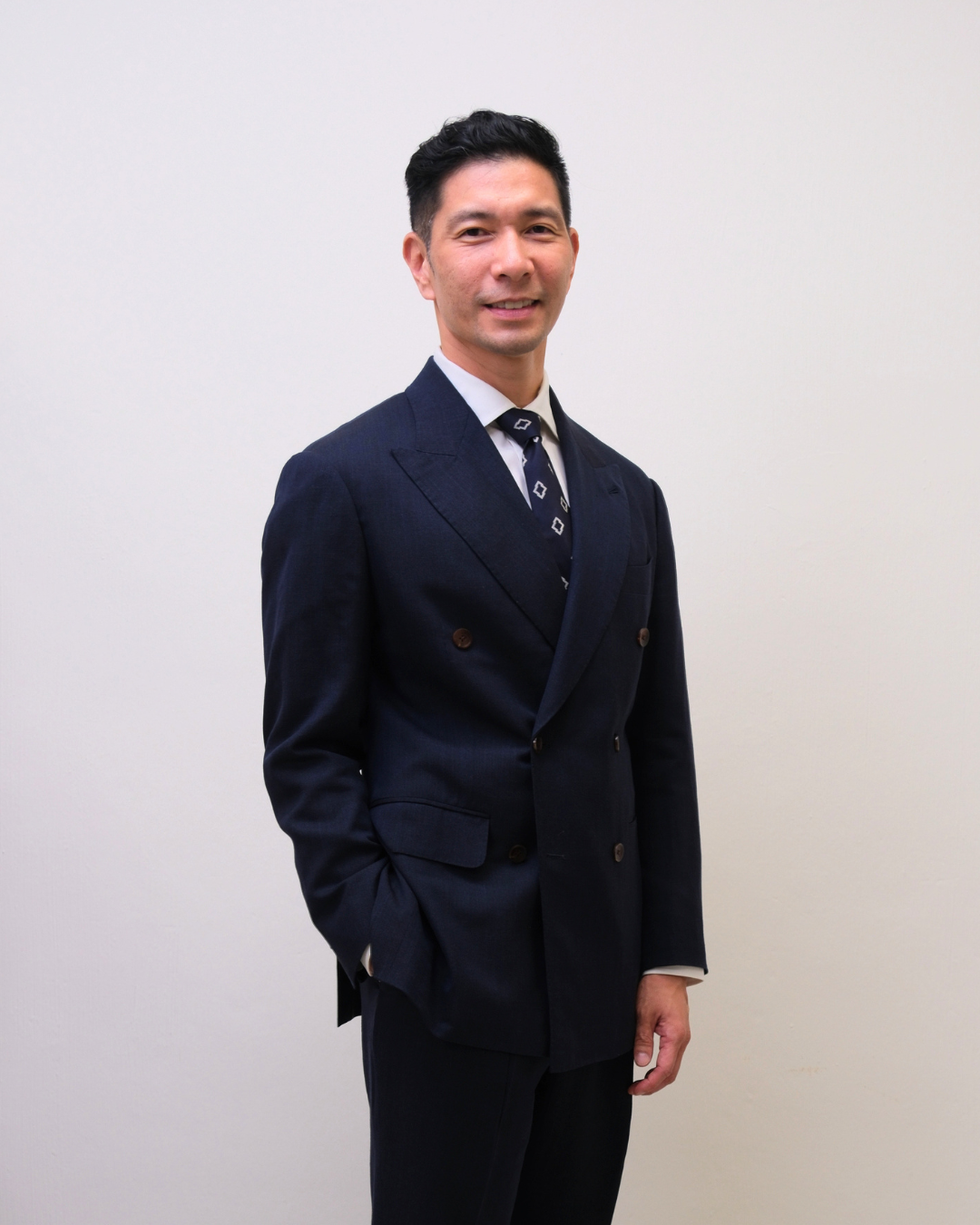
Dr Christopher Teo, dental surgeon with post graduate training in orthodontics

Your clinician

Dr Christopher TeoDental Surgeon with Post Graduate Training in Orthodontics

Fifteen years of orthodontic education and practice across Adelaide and New York, with a clinical focus on adult orthodontics and craniofacial orthopedics — the growth and shape of the jaws, not only the teeth standing in them.

Dr Teo took his Bachelor of Dental Surgery at the University of Adelaide in 2004, then completed a fellowship in orthodontics at New York University in 2013, an orthodontic residency there in 2017, and a Doctor of Dental Surgery in 2019. He is an American Board Certified Orthodontist and continues to teach as an attending orthodontist at Montefiore Einstein in New York. His research is on Invisalign efficacy and on the use of artificial intelligence in orthodontics; he has presented nationally and internationally, has been published in peer-reviewed journals and books, and has been a journal reviewer for PLOS ONE since 2014. He has a particular interest in early treatment for children from around the age of six, and in cases where orthodontics has to be planned alongside other dental work. Consultations in English.

On titles, plainly. In Singapore the title “Orthodontist” is restricted to dentists entered on the Singapore Dental Council’s Register of Dental Specialists. Dr Teo is not on that register, so we do not use it for him — his title is the one above. His American Board certification is a United States credential and a separate thing from Singapore specialist registration. If being treated by an SDC-registered specialist orthodontist matters to you, tell us at the consultation and we will help you find one. Read Dr Teo’s full profile.

Two ways to move a tooth

Same biology, two different tools.

Teeth move because light, continuous force remodels the bone around the root. Braces and aligners both do that. What separates them is how the force is delivered, how much control there is over the root, and — the part nobody likes to hear — who is responsible for the hours.

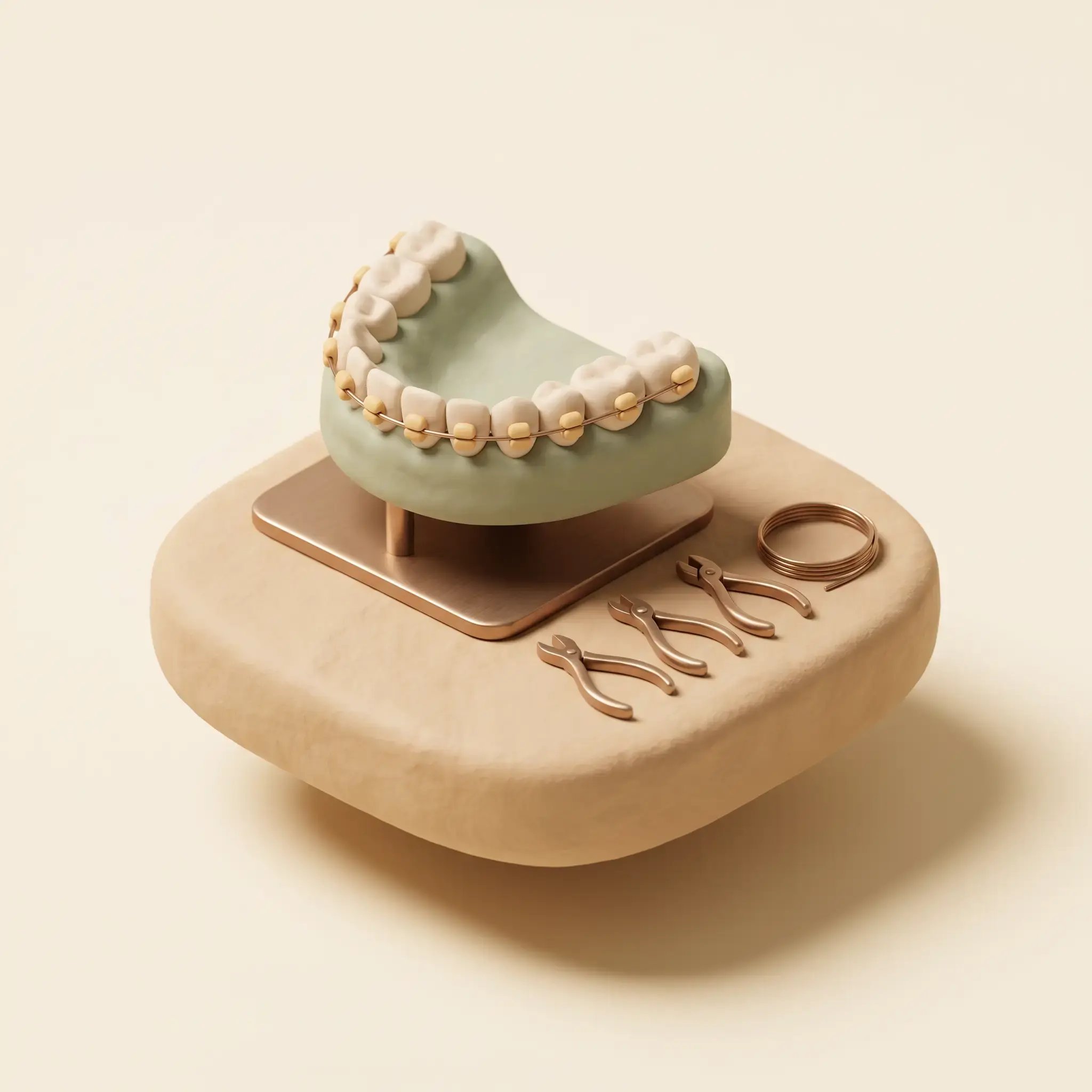
Illustration: a clay archwire threaded through brackets along a row of miniature teeth

Fixed braces

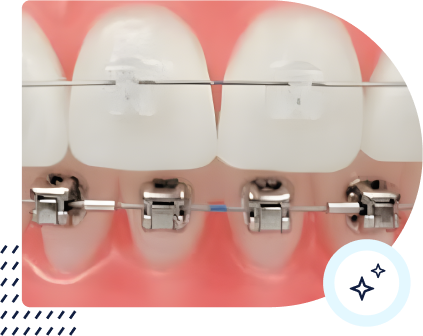
Brackets bonded to each tooth, joined by an archwire that is changed or activated at each visit. Nothing to remember, nothing to take out, and the most direct control over what each individual root does.

  • Working every hour, whether or not you think about it
  • Strongest control where roots must move bodily, or a tooth is badly rotated
  • Metal or ceramic brackets; self-ligating systems hold the wire without elastic ties
  • Visible — less so in ceramic, but visible
  • Harder to clean around, and some foods are off the menu until they come off
Illustration: a stack of clay aligner trays beside a miniature model of an upper arch

Clear aligners

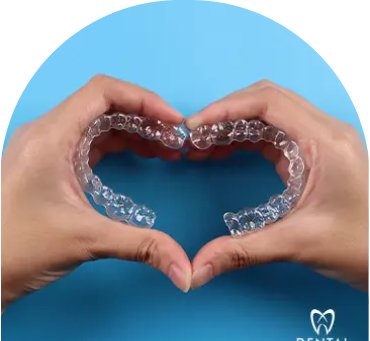
A planned sequence of removable trays, Invisalign among them, each worn for a set period. The movements are staged digitally before the first one is made, so you can see the intended path — and you take them out to eat and brush.

  • Far less visible, and removable for meals, brushing and photographs
  • Small tooth-coloured attachments are bonded on so the trays can grip
  • Easier to keep clean, with no food restrictions
  • Only works while it is in — normally 20 to 22 hours a day
  • Some movements still suit fixed appliances better; a few cases use both

Which one suits your teeth is a clinical decision made from the records, not a menu choice made at the front desk. If aligners are not the right tool for what your case needs, you will be told so — and told why.

How a case is planned

From the first assessment to retainers.

01 — Assessment and records

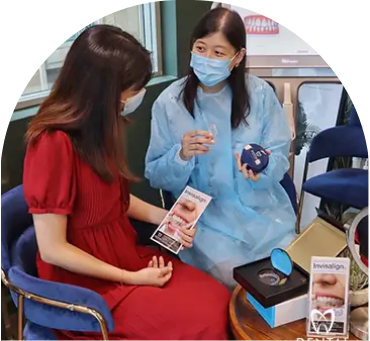
Start with an assessment of your teeth and bite.

At the consultation, your dentist assesses whether braces or Invisalign are suitable, explains the stages of treatment, and discusses whether other dental work or extractions may be needed. Digital scans and intra-oral photographs record the teeth and how they meet. Photographs also help the dentist assess the smile in relation to the face. These records inform the treatment options, expected stages and personalised plan before treatment begins.

A dentist discussing Invisalign treatment during a consultation at Dental Designs Clinic

3D

digital scans and photographs inform the treatment plan

02 — Digital treatment planning

See the proposed tooth movements with ClinCheck.

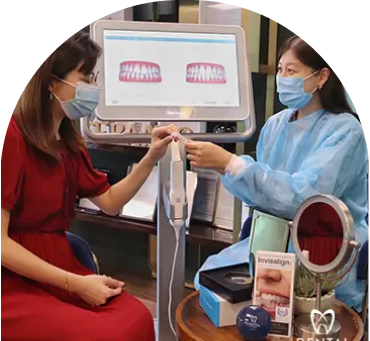
For Invisalign, digital scans and photographs are used in ClinCheck, the aligner planning software. Your dentist reviews and refines the proposed position and movement of individual teeth. A digital simulation helps explain the sequence and discuss the plan with you before the custom aligners are made. The simulation is a planning tool; your progress is checked during treatment and the plan may need refinements.

An Invisalign scanning and digital treatment-planning demonstration at Dental Designs Clinic

Plan

the proposed sequence is reviewed before aligners are made

03 — Braces and clear aligners

Two appliances. Different daily routines.

Fixed braces use brackets attached to the teeth and connected by an archwire. Traditional brackets hold the wire with elastic ties; self-ligating brackets use a sliding mechanism. Metal and ceramic brackets are options discussed during planning. Invisalign uses a series of custom removable aligners to move teeth gradually. Aligners come out for eating, brushing and flossing. Both approaches require progress reviews, and your dentist explains the cleaning, wear and adjustment routine for the appliance chosen.

Illustration of ceramic and metal self-ligating brackets from the Dental Designs braces page

2

fixed braces and removable aligners — selected for your treatment plan

04 — Reviews and retention

Keep checking the fit, during treatment and afterwards.

Progress visits let your dentist check how the teeth are moving and whether adjustments or refinement aligners are needed. At the end of active treatment, your dentist assesses the result and takes scans for custom-made retainers. Retainers help maintain the position of the teeth after braces or aligners. Wear and clean them as directed, and bring them to review visits so their fit can be checked. Tell the clinic if a retainer is lost, damaged or no longer fits.

Clear removable retainers shown on the Dental Designs Invisalign page

Fit

custom-made retainers, with wear instructions and follow-up

What to expect · A course of treatment

Orthodontic treatment, step by step.

No mystery, no surprises — swipe or scroll through the path, from the first consultation to the retainers that keep the result. Four of the six steps are the same whichever appliance you end up in; two are not, so pick the one you want to follow.

Follow the path for
Welcome — miniature diorama of a course of orthodontic treatment
Records — miniature diorama of a course of orthodontic treatment
The plan — miniature diorama of a course of orthodontic treatment
Moving with fixed braces — miniature diorama of a course of orthodontic treatment
Moving with clear aligners — miniature diorama of a course of orthodontic treatment
The detail work with fixed braces — miniature diorama of a course of orthodontic treatment
The detail work with clear aligners — miniature diorama of a course of orthodontic treatment
Retained — miniature diorama of a course of orthodontic treatment
Make an appointment
01 — WELCOME

Come in. What would you change?

Every case starts with the same question, and the answer matters — a course of orthodontics is eighteen months to three years of your life, and it should be aimed at something you actually want. Follow the path through: six scenes, from the first conversation to the retainers.

Wisma Atria, OrchardReferrals & direct appointments
02 — STEP 1 · THE RECORDS

First, the things you cannot see.

A panoramic radiograph of the whole jaw, a cephalometric radiograph from the side, digital study models of both arches, and clinical photographs. The roots, the bone, the unerupted teeth and the way the two jaws relate to each other are all invisible from the front — and all four of those things decide what is possible.

Panoramic & cephalometricDigital study modelsClinical photographs
03 — STEP 2 · THE PLAN

What moves, in what order, and how long.

The records are read and a written plan follows: which teeth move and how far, whether the bite is being corrected as well as the alignment, whether space needs to be made, which appliance suits the movements, and an estimated range for how long it will run. Fees are itemised at this point — before anything is bonded or fitted.

Written planEstimated range, not a single numberItemised fees
04 — STEP 3 · MOVING

Light force, and a lot of patience.

Brackets are bonded to each tooth and the first archwire is fitted — the appointment itself takes about an hour and does not hurt. Then the long middle: back every few weeks so the wire can be changed or activated, each one a little stiffer than the last. Teeth feel tender to bite on for a few days afterwards and then settle. Nothing is asked of you here except turning up and keeping them clean, which is harder than it sounds around brackets.

Adjustments every few weeksTender for a few daysCleaning is the real work
04 — STEP 3 · MOVING

Light force, and the hours you give it.

Small tooth-coloured attachments are bonded on so the trays have something to grip, and the series begins. You move to the next aligner on schedule, and teeth feel tender for a day or two after each change. The clinical part is straightforward; the honest part is that this is the one appliance whose progress you control. Twenty to twenty-two hours a day is not a target, it is the number the treatment time was calculated from — and it is the single most common reason an aligner case runs long.

A new tray on scheduleAttachments do the gripping20–22 hours a day
05 — STEP 4 · THE DETAIL WORK

The last millimetre takes the longest.

Once the teeth are broadly where they should be, the finishing begins: settling the bite so the teeth meet evenly across the arch, correcting individual rotations, levelling the edges. It is done with fine bends in the wire and small elastics, a bracket repositioned where one sits a fraction off. It is the least dramatic phase, it always takes longer than people expect, and it is the one that decides how well the result actually works.

Settling the biteFine wire work
05 — STEP 4 · THE DETAIL WORK

Teeth rarely track exactly as planned.

Near the end, what the teeth have actually done is compared against what the plan said they would do — and there is usually a gap. That is normal rather than a setback: a fresh set of records is taken and a short refinement series is made to close the difference, settling the bite and correcting the rotations that lagged. Most full aligner cases include at least one refinement. A clinic that never mentions them is describing the plan, not the treatment.

Refinement seriesFresh records
06 — STEP 5 · RETAINED

Off — and then held.

The appliances come off, the teeth are cleaned and polished, and retainers are fitted the same day: a fine wire bonded behind the front teeth, a clear retainer for nights, usually both. Retention is reviewed, not just handed over — a bonded wire can fail quietly, and a retainer that no longer fits is not doing anything.

Fitted the same dayRetention reviews

Orthodontic results are held, not fixed in place. Teeth drift throughout life, treated or not, and they will move again if retention stops — which is why the retainers are part of the treatment rather than an optional extra. What can be achieved also varies with the case: where a problem comes from the size or position of the jaws rather than the teeth, correction by tooth movement alone has limits, and Dr Teo will tell you where those limits are at the consultation.

That is the whole path, start to finish.If it is time to find out what your teeth would need, the next step is a consultation at Wisma Atria, Orchard.

Illustration: a clay retainer wire being re-bonded behind a row of miniature front teeth

Had braces before?

Teeth that moved back are not a failure — but they are a question worth answering.

Relapse after earlier orthodontic treatment is one of the most common reasons adults come in, and the crowding that creeps back into the lower front teeth is the classic version of it. Most of it is correctable, often with a shorter course than the original.

What matters is establishing why it moved before moving it again. Sometimes retention simply stopped — the retainer was lost, or wear tapered off after a few years. Sometimes a bonded wire failed silently and nobody noticed for a decade. Sometimes there is a bite problem underneath that the first course did not address, in which case retreating the teeth alone would put you back here again. That is what the records are for. Bring anything you still have from the original treatment: old models, radiographs and even the retainer itself are genuinely useful.

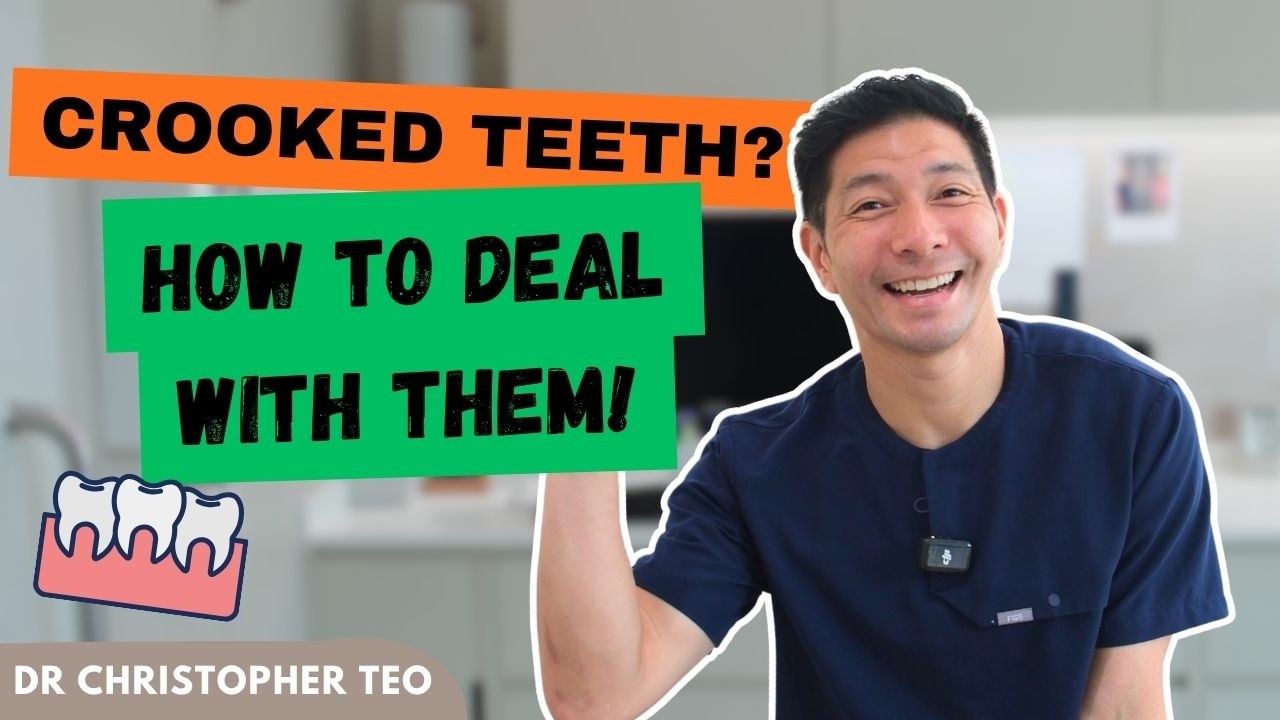
Watch Dr Christopher Teo

Your orthodontic questions, explained by Dr Teo.

Adult braces, crooked teeth and crowding. Two conversations with Dr Teo, filmed for Dental Designs Clinic.

The clinic

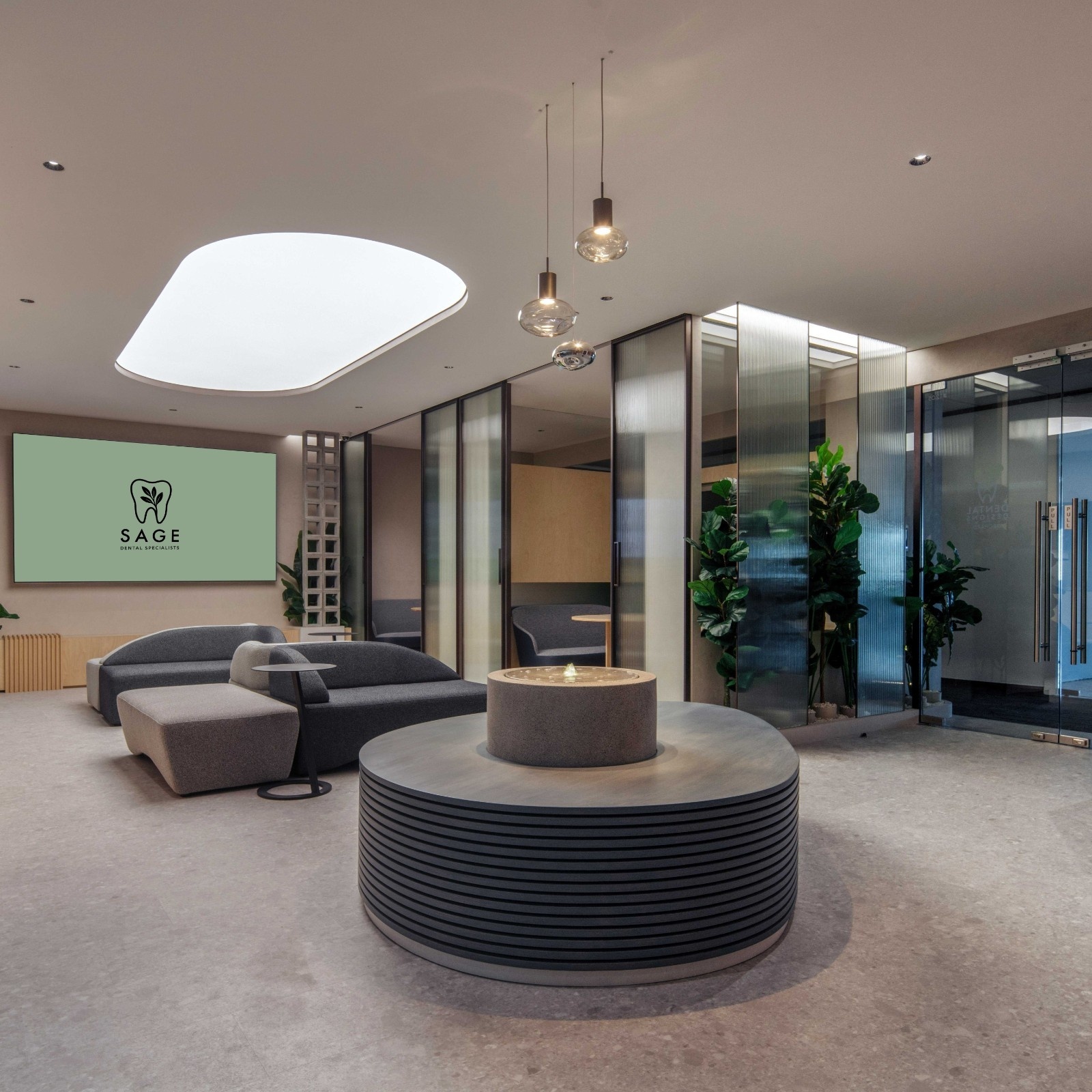
Calm by design.

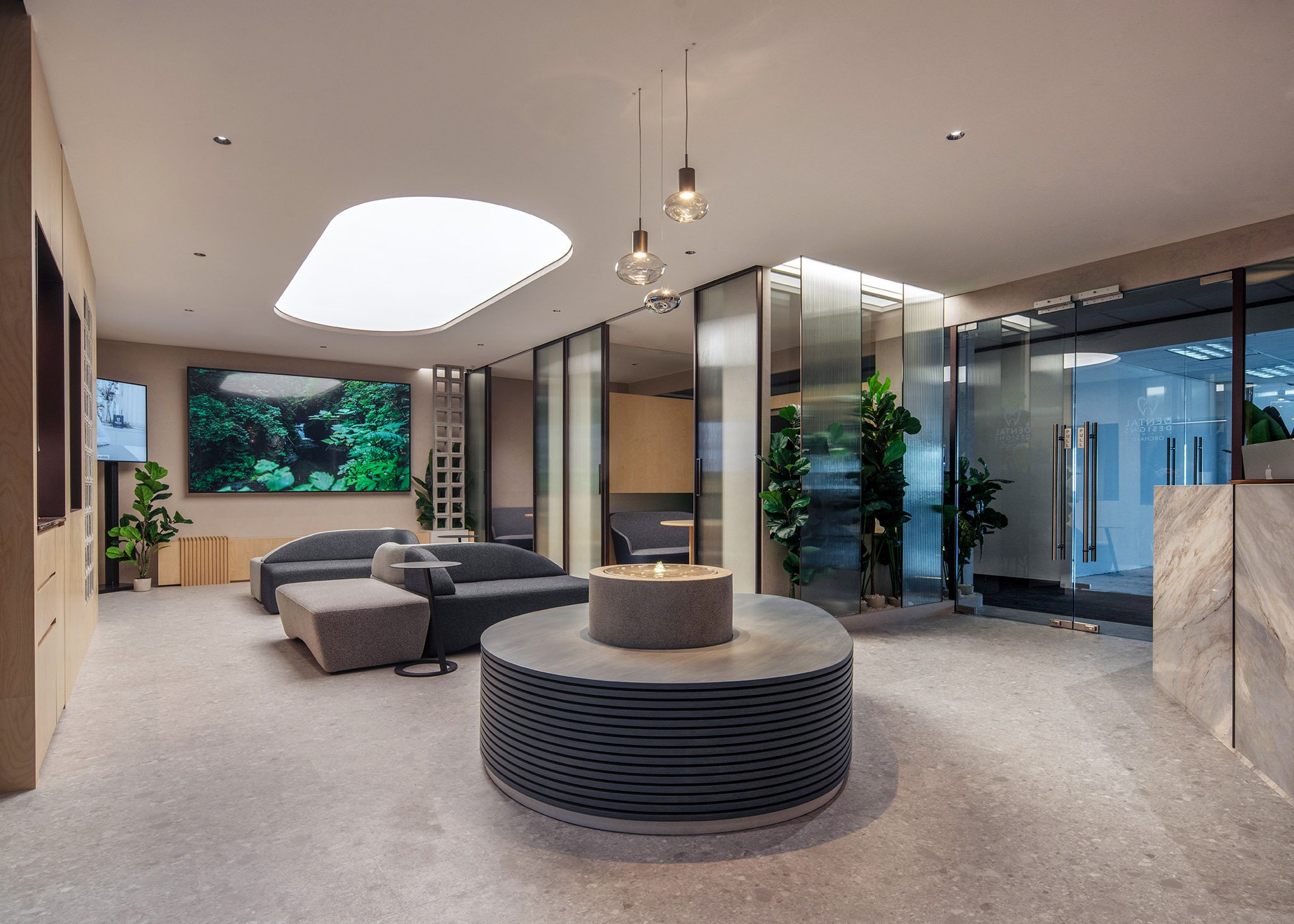
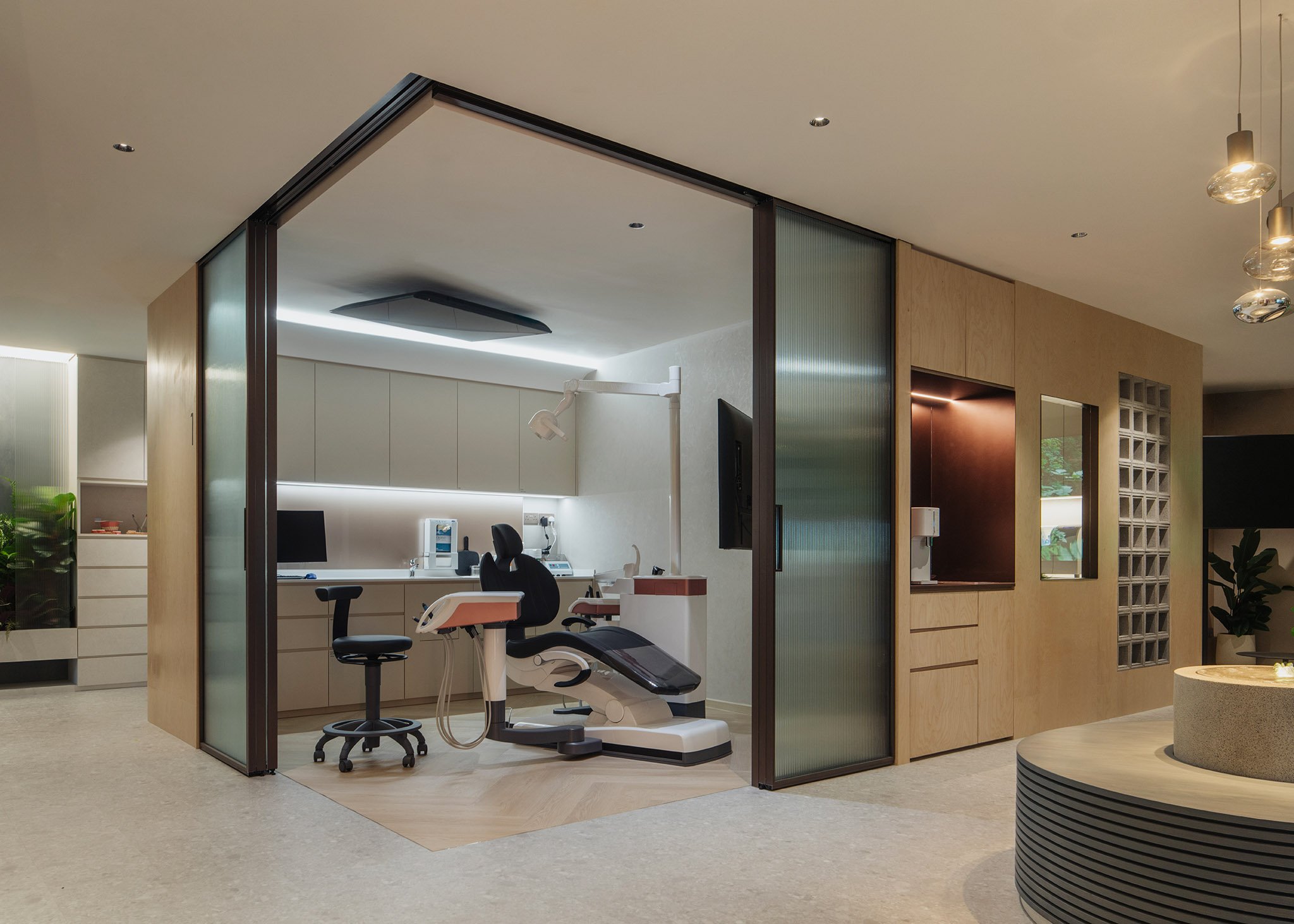
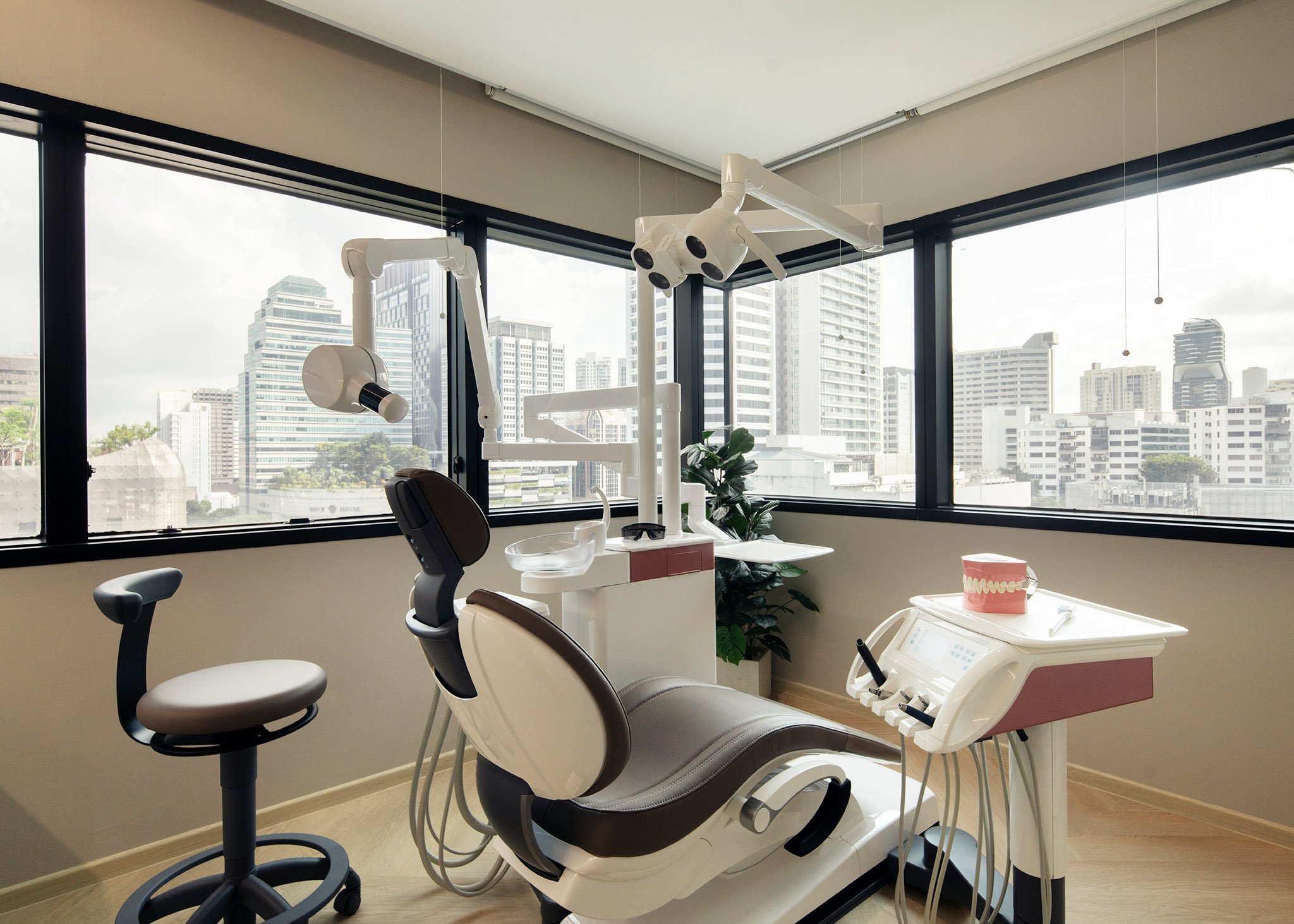
Twelve floors above Orchard Road, with the treatment rooms looking out over it. Orthodontics means coming back regularly for a long time — so it may as well be somewhere you do not mind going.

The reception lounge at the Orchard clinic
Sage Dental Specialists reception, Wisma Atria
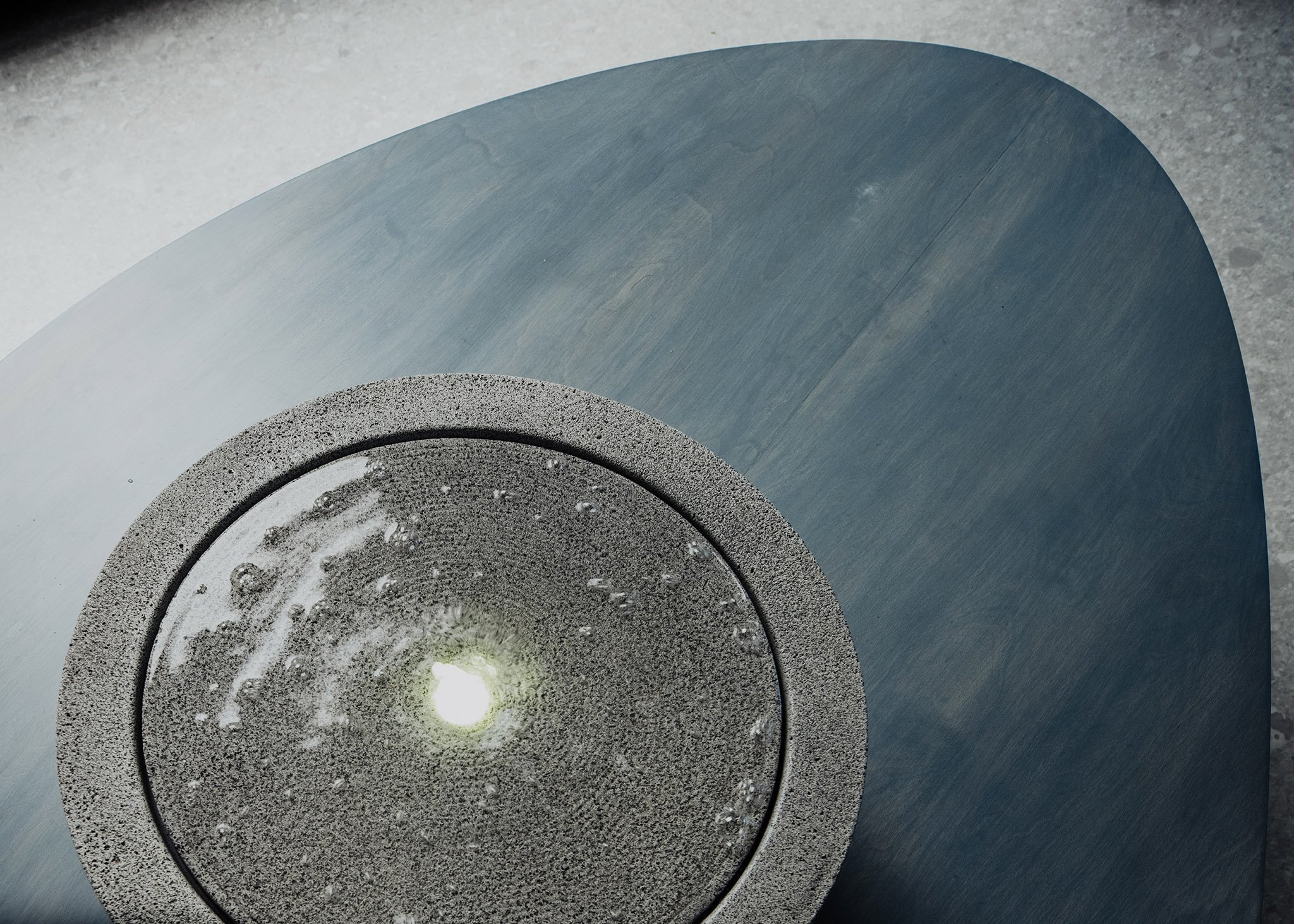
The stone water bowl set into the lounge table
A treatment room at the Orchard clinic, seen from the lounge
A treatment room looking out over Orchard Road

Questions

Orthodontic questions, asked at almost every consultation.

Getting started4 questions
What happens at the first orthodontic consultation?
Dr Teo listens to what you want changed, then examines your teeth, your gums and the way your jaws meet. If the case is one he can help with, a full set of orthodontic records follows: a panoramic radiograph of the whole jaw, a cephalometric radiograph taken from the side, digital study models of both arches, and clinical photographs. Those records are what a plan is built from — they show the roots, the bone and the bite, none of which are visible from the front. You leave with an explanation of the options in plain language and an itemised breakdown of fees before anything is started.
Do I need a referral to be seen?
No. Referrals from dentists are welcome and helpful, but a referral letter is not required — you can make an appointment directly. If you do have a referral letter, recent radiographs or records from previous orthodontic treatment, send them to us by WhatsApp before your visit and we can prepare before you arrive.
Am I too old for braces or aligners?
No. Teeth move at any age, because the biology that lets them move does not switch off — adults in their forties, fifties and beyond are treated routinely, and adult orthodontics is Dr Teo’s stated clinical focus. Two things do differ from treating a teenager. There is no growth left to work with, so problems that come from the size or position of the jaws are corrected by moving teeth rather than by guiding growth, and where that is not enough the honest answer is that the correction has limits. And adult mouths usually carry history — crowns, fillings, worn edges, gum recession, missing teeth — so the gums and the existing dental work are assessed before anything moves. Any active gum disease is treated first: moving teeth in inflamed gums makes bone loss worse.
Braces or clear aligners5 questions
What is the difference between fixed braces and clear aligners?
Both apply light continuous force to move teeth; they differ in how the force is delivered and in who controls the wear time. Fixed braces are brackets bonded to the teeth and connected by an archwire. They are working every hour of every day whether or not you think about them, they grip each tooth directly, and they hold an advantage where roots need to be moved bodily or a tooth needs substantial rotation. Clear aligners are a series of removable custom trays, each worn for a set period. They come out for meals and brushing, they are far less visible, and they let you see the planned sequence before it starts — but they only work while they are in your mouth, which is normally 20 to 22 hours a day. That last point is the real difference. Which one suits a case is decided from the records, not from a preference stated at the front desk.
Can clear aligners do everything braces can?
Not in every case, no — and any clinic telling you otherwise is overselling. Aligners have become capable of much more than they once were, and for a large share of cases the two approaches reach a comparable result. Where fixed braces still tend to have the edge is in movements that need precise control of the root rather than the crown: closing large extraction spaces, uprighting badly tipped teeth, moving teeth vertically, and severely rotated teeth. Some cases are also treated with both — aligners for one phase, fixed appliances for another. The records show which category a case falls into, and Dr Teo will tell you plainly if aligners are not the right tool for your teeth.
Is Invisalign the same as other clear aligners?
Invisalign is a brand of clear aligner, not a separate treatment — the principle is the same across systems: a staged series of custom trays, attachments bonded to the teeth so the trays can grip, and light continuous force. What differs between systems is the material the trays are pressed from, the software the movements are planned in, and how much of the case the treating clinician controls rather than the manufacturer. Invisalign has the longest track record and the largest published evidence base, which is why it is the system most often studied — Dr Teo’s own research is on its efficacy. None of that makes it automatically the right choice for a given case; the records decide that, and for some movements no aligner system is the right answer.
What are aligner attachments, and are they visible?
Attachments are small bumps of tooth-coloured filling material bonded onto selected teeth, shaped so the aligner has something to push against. Without them a smooth tray slides over a smooth tooth and certain movements — rotating a round tooth, moving one bodily rather than tipping it — simply do not happen. They are close to the colour of your teeth and most people do not notice them at conversational distance, but they are not invisible: up close, and in photographs taken with the aligners out, you can see them. They are removed and the surfaces polished when treatment finishes.
How long does orthodontic treatment take?
It depends on how far the teeth have to travel and what the bite needs, so an honest answer only exists once the records are read. As a general picture, minor alignment of the front teeth can be a matter of months, while a full case that corrects the bite as well as the alignment commonly runs one and a half to three years. Two things extend treatment more than anything else: aligners not worn for the hours they need, and missed adjustment visits. You will be given an estimated range in your written plan rather than a single number, because a single number would be a guess presented as a fact.

Living with treatment5 questions
Does orthodontic treatment hurt?
Fitting braces or a new aligner does not hurt at the time. What most people notice is a dull ache and teeth that feel tender to bite on for two to four days afterwards, strongest in the first day or so, and then it settles. It returns mildly after each adjustment or each new aligner, and it gets less noticeable as treatment goes on. Ordinary painkillers you would use for a headache help, softer food for a couple of days helps more, and orthodontic wax covers any bracket that is rubbing while the cheek toughens up. Tell us if discomfort is severe or is not settling — that is not the expected course, and it is worth a look.
What can I not eat with braces?
With fixed braces the rule is anything hard, sticky or chewy enough to snap a bracket off or bend a wire: ice, hard nuts, boiled sweets, crusty bread, sticky toffee and chewing gum. Hard fruit and vegetables are fine cut into pieces rather than bitten into, and the same goes for corn on the cob and ribs. Sugary and acidic drinks deserve real caution, because brackets create places a toothbrush reaches poorly and decay around a bracket leaves a mark that outlasts the treatment. Clear aligners have no food restrictions at all, because they come out to eat — but they must go back in, and nothing but plain water should be drunk while they are on.
Can I eat and drink with clear aligners in?
Take them out to eat, always — chewing with aligners in cracks them, and food trapped underneath sits against the tooth for hours. Plain water is the only thing that should be drunk with them in. Coffee, tea and anything coloured will stain the trays, and anything sugary or acidic is held against the enamel by the tray instead of being washed away, which is how people finish aligner treatment with straight teeth and new decay. Brush before they go back in. The practical consequence is that aligners reward a regular eating pattern and punish constant grazing — every snack costs you wear time, and the wear time is the treatment.
What happens if I lose an aligner?
Tell us as soon as you notice, and in the meantime go back to the previous aligner rather than forward to the next one — the previous tray still fits, the next one will not, and forcing it either does not seat or moves teeth in a way the plan did not intend. Whether the lost tray is replaced or you simply move on depends on how far through it you were and how the case is tracking. Losing one is a minor inconvenience; leaving it a fortnight without wearing anything is not, because teeth start drifting back within days and the whole remaining series is cut to fit where they were supposed to be.
What should I do if a bracket comes off or a wire is digging in?
Contact us and we will arrange to see you. In the meantime, orthodontic wax pressed over the offending bracket or wire end will stop it rubbing; a wire that has slipped out of place at the back can usually be tucked down with the blunt end of a cotton bud. Do not cut a wire yourself. A single loose bracket is not an emergency, but it is not something to leave for a month either, because the teeth it was holding will drift and add time to the treatment. If a broken appliance has cut the cheek or you cannot eat, tell us that when you call so we can prioritise the appointment.
Children & timing4 questions
When should a child first be assessed for orthodontic treatment?
Around the age of seven is the usual guidance, which surprises parents who expect braces to be a teenage matter. The point of an assessment at that age is not to start treatment — for most children it ends with a plan to review and nothing more. It is to catch the small number of problems where the jaws are still growing and the growth itself can be used: a narrow upper jaw, a crossbite that is pushing the lower jaw sideways to close, a severe protrusion at real risk of trauma, teeth erupting into the wrong place, or crowding so marked that the adult canines may become blocked. Those are worth finding while there is growth left to work with.
What is early or interceptive orthodontic treatment?
It is a short, targeted first phase in a child who is still growing, aimed at one specific problem rather than at straightening everything. Widening a narrow upper jaw with an expander so the bite meets evenly, guiding an erupting tooth into a better position, holding space where a baby tooth has been lost early, or reducing a protrusion that leaves the front teeth exposed to knocks — each of those is far simpler to do while the bones are still growing than to correct afterwards. Early treatment usually does not remove the need for a full course of braces or aligners in the teenage years; what it does is make that second phase simpler, and in some cases it prevents a problem that would otherwise have needed surgery.
Does my child need a palatal expander?
Only if the upper jaw is genuinely too narrow for the lower one — most children do not need one. The sign clinicians look for is a crossbite, where some upper teeth sit inside the lower teeth when the back teeth meet, often with the lower jaw shifting sideways to find a comfortable bite. An expander applies gentle pressure across the midline suture of the upper jaw, which in a growing child is still able to widen. Timing is the whole point: the same correction becomes progressively harder once that suture has fused, and in an adult it can require surgery. Whether your child needs one is answered by the examination and the records, not by how crowded the front teeth look.
Will my child still need braces later if they have early treatment?
Usually yes, and it is better to hear that at the start than to feel misled later. Early treatment fixes one specific problem during growth; it does not align a full adult dentition that has not finished erupting yet. What it changes is the size of the job waiting at the end — a second phase that is shorter, more predictable, and less likely to need extractions or surgery. When a first phase is recommended, you should be told plainly what it is for, what it will not do, and what is likely to be needed afterwards. If that has not been explained to you, ask.
Retention & relapse2 questions
Do I have to wear retainers forever?
If you want the teeth to stay where they were put, then in some form yes — and it is the part of orthodontics people are least often told about honestly. Teeth are held in bone by fibres that have a long memory, and the whole mouth keeps changing slowly throughout life whether or not you ever had treatment. Retention is normally a fixed retainer, a fine wire bonded behind the front teeth, or a clear removable retainer worn at night, and often both. The wear usually reduces from full-time to nightly, and then to a few nights a week — but it does not reach zero without accepting that the teeth will gradually move. Retainers also need checking and replacing over the years; a bonded wire can come away without you noticing.
My teeth moved after braces years ago — can that be corrected?
In most cases yes, and it is one of the more common reasons adults come in. Relapse after earlier treatment is usually a matter of degree: mild crowding that has crept back into the lower front teeth may need only a short course of aligners, while a bite that has shifted substantially is assessed as a fresh case. The first job is to work out why it moved, because retreating the teeth without answering that only buys time — sometimes retention simply stopped, sometimes a bonded retainer failed silently, sometimes there is an underlying bite problem the first course did not address. Bring whatever you still have from the original treatment; old records are genuinely useful.
Fees, insurance & other dental work4 questions
How much do braces or clear aligners cost in Singapore?
At Sage Dental Specialists, consultation costs S$163.50–272.50, braces packages range from S$7,630–8,720, and Invisalign packages range from S$5,886–10,682, inclusive of 9% GST. Prices may vary depending on the complexity and time required. Your package inclusions and any additional charges are confirmed in a personalised quotation before treatment begins — and if a case turns out to be one we should not be treating, we will say so rather than quote for it.
Can I use Medisave or CHAS for braces or aligners?
No to both, and it is worth knowing before you plan around it. Medisave covers a defined list of surgical dental procedures; orthodontic treatment is not on it, so braces, aligners and retainers cannot be claimed. CHAS subsidises selected routine treatment such as scaling, fillings and extractions for eligible cardholders, and specifically excludes orthodontic treatment. Some dental insurance policies do include orthodontic benefits, more often on child or expatriate plans than on adult local ones, and those usually require written pre-approval before treatment starts — send us your benefit details and we will check what your policy actually covers.
Can I have braces or aligners if I have gum disease or missing teeth?
Often yes, but the sequence matters and it is not negotiable. Active gum disease is treated and brought under control before any tooth is moved, because orthodontic force applied to teeth with inflamed gums and reduced bone support accelerates the loss rather than the correction. Once the gums are stable, teeth with reduced support can still be moved, with lighter forces and closer monitoring. Missing teeth are the other common situation, and orthodontics is frequently the step that makes the rest possible — opening or closing a space so an implant or a bridge can be placed properly. That kind of case is planned jointly with the clinician who will do the restorative work, which is what multidisciplinary treatment means in practice.
What insurance do you accept?
We accept most dental insurance, and many insurers can be billed directly so you do not pay upfront and claim back. Orthodontic benefits are a separate matter from general dental cover — where a policy includes them, there is often an annual or lifetime limit and a pre-approval requirement, so it is worth checking before treatment starts rather than after. The full list of direct-billing partners, the plans that need written pre-approval, and how self-claim works are on our payments and insurance page. If your provider is not listed, send us your benefit card details and we will check for you.

Question not answered here?Ask us directly — you will get an answer from someone clinical, not a brochure.

Fees

Braces and clear aligner fees in Singapore — itemised before treatment begins.

You should not have to ask what this will cost. The guide below sets out our consultation fee and package ranges for braces and Invisalign. Your own quotation is itemised line by line once the records have been read, before anything is bonded or fitted.

ConsultationAn assessment and discussion of your treatment options
S$163.50 – S$272.50
Orthodontic (braces) packagesYour treatment plan and package details are confirmed at consultation
S$7,630 – S$8,720
Invisalign packagesSuitability and the package required depend on your assessment
S$5,886 – S$10,682

All prices are in Singapore dollars and inclusive of 9% GST. Prices may vary depending on the complexity and time required. A personalised quotation, including the services covered by your package and any additional charges, will be provided before treatment begins.

Medisave and CHAS do not cover orthodontics

We would rather say this plainly than let you find out later. Medisave covers a defined list of surgical dental procedures and orthodontic treatment is not among them, so braces, aligners and retainers cannot be claimed against it. CHAS subsidises selected routine treatment — scaling, fillings, extractions — for eligible cardholders, and excludes orthodontic treatment.

Dental insurance is the exception worth checking. Some policies do include orthodontic benefits — more often on child and expatriate plans than on adult local ones — usually with an annual or lifetime limit and a written pre-approval requirement before treatment starts. Send us your benefit details and we will check what your policy actually covers before you commit to anything.

Insurance

Most dental insurance is accepted, with direct billing for many insurers. Everything is on one page, so you can check before you visit.

Want to know what your treatment would involve?Send us your referral letter or any recent radiographs and we can prepare before you visit.

Sage Dental Specialists

To make an appointment, call or WhatsApp us.

435 Orchard Road, #12-04 Wisma Atria Office Tower, Singapore 238877
Above Orchard MRT (NS22 / TE14) via Exit 3 · parking in the same building

Monday to Friday 9am – 6pm · Saturday 9am – 1pm · closed Sundays and public holidays

Referring dentist? Visit our referring dentists page.

© Sage Dental Specialists · 435 Orchard Road #12-04, Wisma Atria Office Tower, Singapore 238877